Over nearly three decades in Costa Rica real estate, I’ve advised private investors, entrepreneurs, developers, and families evaluating luxury residential, commercial, development, and boutique hospitality assets. That work has included successful consultation on operating hotels, eco-lodges, resort concepts, development land, and tourism properties with repositioning or expansion potential.
Hospitality investment in Costa Rica is compelling because it combines an operating business capable of generating recurring revenue with an underlying real estate asset that may appreciate over time. The strongest opportunities can also create value through brand equity, diversified revenue, development rights, and alignment with growing demand for luxury, wellness, eco-tourism, adventure, and experiential travel.
To understand the opportunity, investors must consider both the fundamentals supporting Costa Rica’s tourism market and the financial, operational, and strategic realities of acquiring a hospitality enterprise.
Why Costa Rica Continues to Attract Hospitality Investment
Costa Rica welcomed nearly 2.94 million international overnight visitors in 2025, including more than 2.68 million who arrived by air. For a country with a population of approximately 5.1 million, that volume is significant. North America accounted for nearly 2 million arrivals, including more than 1.62 million travelers from the United States, reinforcing the strength of Costa Rica’s relationship with its principal source markets.
Visitor volume alone, however, does not determine the quality of a hospitality investment. Investors must also understand what draws travelers to the country, how those preferences are evolving, and which concepts are positioned to capture higher-value demand.
Costa Rica benefits from several durable tourism drivers:
Nature, wildlife, and adventure tourism. National parks, rainforests, beaches, marine ecosystems, wildlife, surfing, sportfishing, hiking, diving, and rafting give hospitality operators a strong foundation for experience-led programming and ancillary revenue.
Eco-luxury and sustainability. Affluent travelers increasingly expect comfort, design, and environmental responsibility to coexist. Low-density development, responsible water and energy use, local sourcing, habitat protection, and community integration can strengthen both the guest proposition and the resilience of the asset.
Wellness, retreats, and private groups. Properties capable of accommodating wellness programs, weddings, corporate gatherings, educational travel, and full-property buyouts can package lodging, food and beverage, activities, and event services into higher-value stays.
Longer, lifestyle-oriented stays. Remote professionals, seasonal residents, retirees, and families exploring relocation often require more space, privacy, kitchens, work areas, and community access than conventional vacationers. This creates opportunities for concepts positioned between short-term tourism and residential living.
These trends do not guarantee that every hotel, eco-lodge, or retreat will perform. They do, however, give investors several credible demand segments around which to build, acquire, or reposition a hospitality business. The strongest assets tend to combine a compelling location or sense of place with disciplined operations, a clearly defined guest profile, and something difficult to replicate, whether that is a protected view, direct access to nature, established brand equity, or developable land.

From a Luxury Vacation Rental to a Hospitality Enterprise
A luxury vacation rental and a larger hospitality project may both generate income from short-term guests, but they are fundamentally different investments. They require different levels of capital, infrastructure, management, operational expertise, and risk tolerance, and they should not be compared on gross revenue alone.
A single luxury residence generally offers simpler ownership, personal-use flexibility, and an exit through the residential resale market. Its revenue, however, is concentrated in one property and one booking calendar. A hotel, eco-lodge, retreat center, or villa compound can distribute revenue across multiple units and supplement room income through food and beverage, wellness services, events, tours, transportation, or group buyouts. That diversification may create greater scale, but it also introduces payroll, inventory, licensing, guest services, working-capital requirements, and a more complex operating structure.
The relevant comparison is therefore the quality of the return after accounting for the full capital and operational demands of each model. Investors should consider:
Total capital deployment. The acquisition basis may include renovations, deferred maintenance, working capital, technology, staffing, brand development, and future expansion, not simply the purchase price.
Net operating performance. Occupancy and gross revenue must be evaluated alongside payroll, utilities, commissions, maintenance, insurance, taxes, management expenses, and replacement reserves.
Operating leverage and diversification. Multiple units and revenue centers can strengthen margins and reduce dependence on one booking stream, but they also increase fixed costs and exposure during slower periods.
Scalability and owner involvement. A hospitality enterprise may support additional accommodations, amenities, or programming, but it requires a clear decision about whether the investor will remain passive, appoint an operator, or participate directly in the business.
Liquidity and exit strategy. A luxury residence may appeal to a broader residential buyer pool, while a hospitality asset is typically valued according to its real estate, operating performance, brand, and future upside, often requiring a more specialized buyer.
The appropriate allocation depends on the investor’s capital strategy, experience, risk tolerance, time horizon, and desired level of involvement. My role is to help clients compare these models through a cost-benefit and risk-adjusted return framework rather than treating them as interchangeable forms of rental real estate.
What Sophisticated Hospitality Investors Evaluate
When I assess a Costa Rica hotel for sale or an established hospitality business, I evaluate it as both real estate and an operating company. A beautiful location cannot compensate indefinitely for weak management or an unsustainable cost structure, while strong historical operations may not justify an acquisition if the property has material legal, physical, or development constraints. The investment thesis must work on both sides.
Location, Demand, and Market Position
Location must be evaluated commercially, not merely aesthetically. Ocean views, rainforest, beach access, or proximity to a national park may create guest appeal, but investors must also assess road and air access, seasonality, infrastructure, labor availability, competing supply, demand generators, and the maturity of the surrounding tourism market.
Different destinations serve different guest profiles and require different underwriting assumptions. A luxury boutique hotel in Manuel Antonio or Guanacaste will not share the same demand model as a retreat center, surf lodge, eco-lodge, or owner-operated villa business in Dominical and the Ballena Coast, including Uvita or Ojochal.
Operating Performance and Unit Economics
Financial diligence should distinguish reported results from sustainable post-acquisition performance. That requires analysis of occupancy, average daily rate, revenue per available room, length of stay, channel mix, guest acquisition costs, payroll, operating margins, seasonality, and capital expenditure history.
The financials may also need to be normalized. Owner-operated properties can understate management costs when the sellers perform multiple roles without market-rate compensation, while renovation closures, deferred maintenance, or one-time events may distort past results. Investors must understand what the enterprise is likely to produce under a realistic future operating structure.
Room revenue is only part of that analysis. Food and beverage, tours, wellness services, events, transportation, retail, and retreat programming should each be evaluated according to their contribution margin, staffing burden, and strategic role. Not every revenue center must be highly profitable on its own, but each should support a deliberate commercial objective.
Brand Equity and Transferability
In boutique hospitality, brand strength can influence pricing power, direct bookings, repeat visitation, and enterprise value. Investors should assess the property’s reputation, review history, website, photography, guest database, partnerships, and direct-booking strategy, as well as whether that value will transfer under new ownership.
The same principle applies to operations. A business with trained staff, documented procedures, reliable vendors, appropriate technology, and management depth presents less transition risk than one whose success depends heavily on the current owner’s relationships or daily involvement.
Physical, Legal, and Infrastructure Fundamentals
Deferred maintenance and infrastructure limitations can materially change the acquisition basis and the first years of return. Buildings, pools, water and wastewater systems, electrical infrastructure, roads, retaining structures, kitchens, furnishings, and guest-facing finishes should be assessed before projected cash flow is relied upon.
Legal and development review is equally important. Title or concession status, land use, environmental approvals, water availability, access, easements, permits, operating licenses, and corporate structure determine what the property can legally and practically support. Available land should never be treated as developable land until the relevant rights, approvals, and infrastructure have been confirmed.
Value Creation, Risk, and Exit Positioning
Additional rooms, villas, wellness facilities, event spaces, restaurants, or branded residences may create value, but only when the incremental development cost, permitting risk, infrastructure demands, operating requirements, and expected return support the investment case.
Every acquisition should also be tested against downside scenarios, including changes in occupancy, average daily rate, labor costs, financing terms, and capital expenditures. The exit strategy should be considered before closing, whether the long-term objective is to operate and hold, expand before sale, reposition the brand, introduce an operating partner, or dispose of the real estate and business together.

The Investment Case for a Turnkey Hospitality Business
For many private investors, acquiring an established hospitality operation offers a more attractive risk profile than developing from the ground up. An operating business can provide historical financial data, trained staff, systems, guest reviews, supplier relationships, brand recognition, and an existing route to market. It may also begin generating revenue immediately, reducing the period during which capital is committed without operating income.
Turnkey, however, does not mean passive or risk-free. Investors must determine whether historical performance is repeatable, whether the operation can transition successfully, and whether deferred maintenance, owner dependence, or underinvestment will require additional capital after closing.
The strongest turnkey opportunities tend to combine current performance with credible future upside. Key advantages may include:
Immediate revenue and verifiable operating history, giving investors a factual basis for underwriting and a shorter path to cash flow.
Reduced development and pre-opening exposure, provided that the existing use, permits, licenses, and infrastructure are properly documented.
Established staff, systems, vendors, and distribution, which can reduce disruption during the ownership transition.
Existing brand equity and direct demand, including reviews, repeat guests, market recognition, and a direct-booking base.
Repositioning and expansion potential, through improved revenue management, targeted capital expenditure, stronger branding, new programming, additional accommodations, or future partnerships.
For the right buyer, the value of a turnkey asset lies in the ability to acquire a functioning platform rather than build one from the beginning. The objective is to preserve what already works while identifying the operational, physical, and strategic improvements most likely to strengthen cash flow and long-term enterprise value.
Featured Hospitality Investment Opportunities
Costa Rica’s hospitality sector offers a wide range of opportunities, from internationally recognized boutique hotels to eco-lodges, wellness retreats, and operating businesses with development potential. Each serves a different guest profile and requires a different investment strategy.
The following five properties illustrate that diversity, as well as the different ways hospitality ownership can combine real estate, recurring income, lifestyle, and long-term value.

Gaia Hotel | Manuel Antonio, Puntarenas
Luxury Hospitality at an International Standard
Few boutique hotels in Costa Rica have earned the reputation and international recognition of Gaia Hotel.
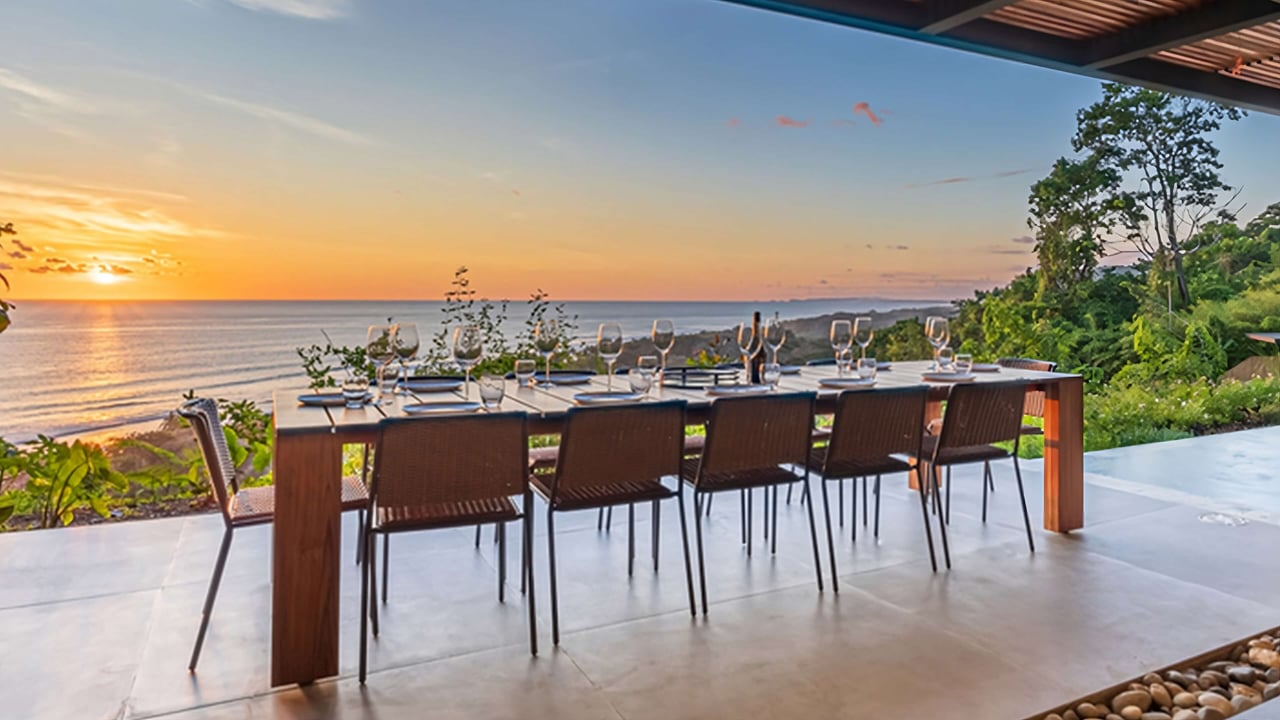
Located in Manuel Antonio—one of Costa Rica's most established luxury tourism destinations—Gaia has become synonymous with elevated guest experiences, exceptional service, and panoramic Pacific Ocean views.
From an investment perspective, Gaia represents much more than a luxury hotel.
It is an established hospitality business with operational history, brand equity, loyal clientele, and immediate revenue potential.
For buyers seeking an operating business rather than a development project, opportunities of this caliber are increasingly difficult to find.
Investment Highlights
● Award-winning luxury boutique hote
● Established international reputation
● Prime Manuel Antonio location
● Exceptional Pacific Ocean views
● Existing operational infrastructure
● Luxury guest amenities
● Immediate income-producing opportunity
Lifestyle Appeal
Owning Gaia Hotel offers investors the opportunity to steward one of Costa Rica's most recognized hospitality brands while enjoying one of the country's premier coastal destinations.
Expansion Potential
● Luxury wellness programming
● Culinary experiences
● Strategic brand partnerships
● Guest experience enhancements
● Premium hospitality services
Ideal Investor
Luxury hospitality groups, boutique hotel operators, family offices, experienced hospitality entrepreneurs, and investors seeking an established flagship hospitality asset.
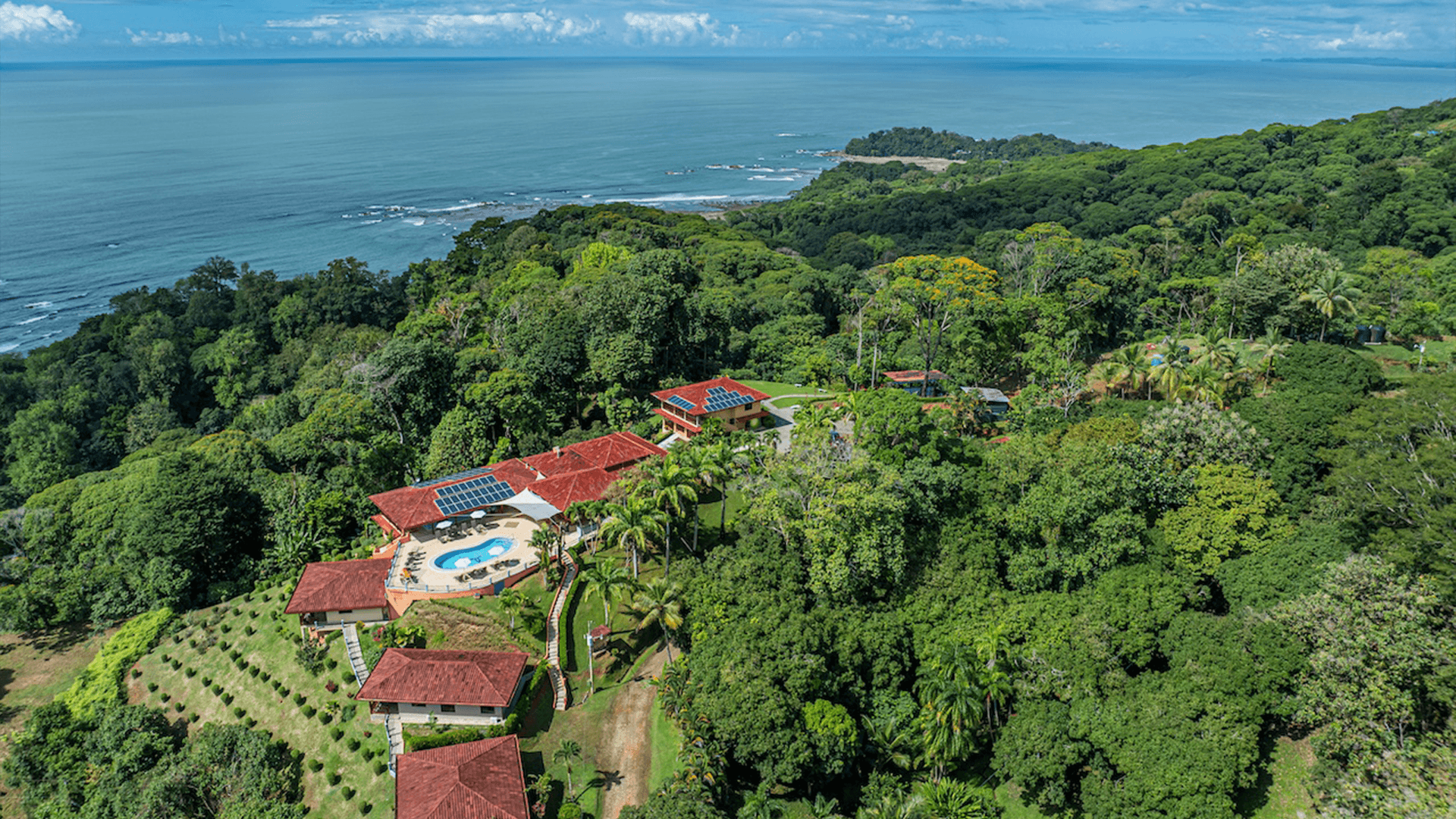
Villas Alturas | Dominical, Puntarenas
Hospitality Meets Development Opportunity
Some hospitality investments create value not only through current operations, but through future possibilities.
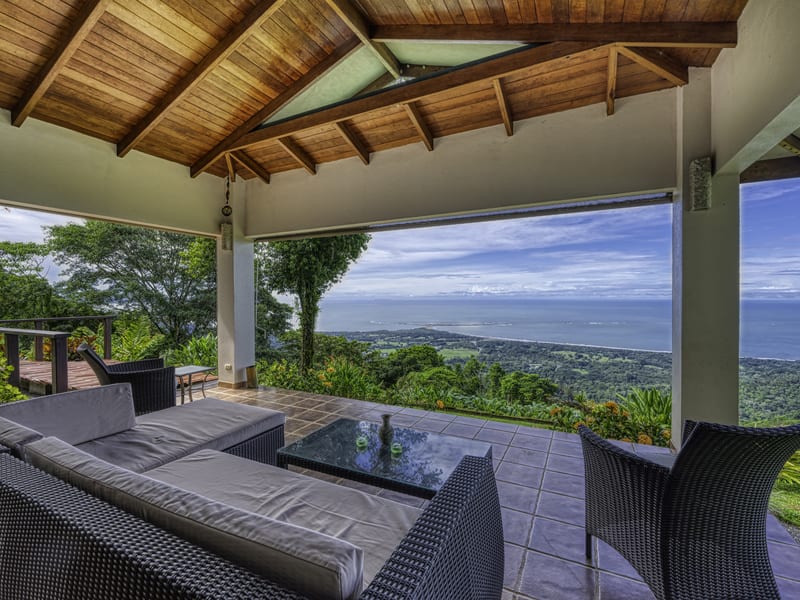
Villas Alturas is an excellent example. Located above the Southern Pacific coastline near Dominical, the property combines an operating hospitality business with exceptional ocean-view land that offers meaningful opportunities for expansion and repositioning.
For developers and hospitality investors, this type of property presents multiple investment strategies. The existing operation provides immediate business activity while the surrounding land creates opportunities for additional accommodations, wellness facilities, branded residences, or expanded hospitality programming.
Investment Highlights
● Operating boutique hospitality business
● Significant ocean-view land
● Expansion opportunities
● Established destination
● Hospitality and development upside
● Premium Southern Pacific location
Lifestyle Appeal
The Dominical region continues attracting visitors seeking surfing, nature, wellness, and authentic Costa Rican experiences, making the area particularly attractive for boutique hospitality concepts.
Expansion Potential
● Additional guest accommodations
● Wellness retreat facilities
● Event and gathering spaces
● Luxury villas
● Hospitality repositioning
Ideal Investor
Hospitality developers, boutique hotel groups, wellness operators, and investors seeking value-add opportunities with long-term appreciation potential.

Boutique Hotel | Santa Teresa, Puntarenas
9-Bedroom Boutique Hotel with Pool, Steps from the Beach
This boutique hotel represents a solid investment opportunity in the heart of Santa Teresa, one of Costa Rica's most high-demand and fast-growing beach markets.
The property is currently fully operational and features a total of 9 rooms. These are currently distributed as 7 active guest suites, plus 1 staff room and 1 owner’s unit—both of which hold excellent potential to be converted into additional guest rooms.
Investment Highlights
● Immediate Cash Flow
● Prime Real Estate
● High-Yield Location
● Modern Construction
● Premium Guest Suites
Lifestyle Appeal
Features a dedicated on-site owner's residence, allowing you to live comfortably in paradise while overseeing a boutique hospitality business.
Expansion Potential
● Room Inventory Growth
● Operational Optimization
● Wellness & Retreat Integration
● F&B or Pool Bar Partnership
● Eco-Luxury Positioning
Ideal Investor
An investor or owner-operator looking to own a slice of paradise while immediately scaling revenue by converting the existing spaces into high-yield rental suites.

Tinamastes Retreat | Dominical Region
A Hospitality Business Designed Around Wellness
Wellness tourism continues to be one of the fastest-growing segments of the global hospitality industry.
Tinamastes Retreat is positioned to capitalize on that trend. Surrounded by nature, the property offers an ideal foundation for yoga retreats, transformational travel, wellness programming, corporate retreats, and educational experiences. Properties like this appeal to investors who want to build communities around experiences rather than simply provide accommodations.
Investment Highlights
● Retreat-focused hospitality property
● Established accommodations
● Natural setting
● Wellness tourism appeal
● Group programming opportunities
● Flexible hospitality model
Lifestyle Appeal
Owners have the opportunity to create a purpose-driven hospitality business centered around health, education, community, and transformational travel.
Expansion Potential
● Wellness facilities
● Event programming
● Retreat experiences
● Educational workshops
● Corporate events
Ideal Investor
Retreat operators, wellness brands, hospitality entrepreneurs, yoga organizations, and investors focused on experiential travel.

Hotel Amavi | Jacó, Puntarenas
Boutique Luxury Surrounded by Nature
Own a piece of paradise—and television history—with Hotel Amavi, the vibrant boutique hotel featured on HGTV’s Betting on Paradise. Fully rebuilt from the ground up, this 9-bedroom, 11-bathroom tropical retreat is a seamless blend of bold design, laid-back luxury, and the joyful spirit of Pura Vida.
Located just one block from Jacó’s stunning south beach, Hotel Amavi is more than a destination—it’s an experience. Every detail, from the custom bohemian interiors to the art-forward ambiance, has been thoughtfully crafted to captivate guests and inspire return visits.
Investment Highlights
● Prime Beachside Location
● Turnkey Profitable Operation
● Dual-Stream Revenue Mode
● Flexible Buying Terms
● Custom Boho-Luxe Design
● Complete Modern Amenities
Lifestyle Appeal
Hotel Amavi is a boho-luxe oasis where art meets nature, creating a highly photogenic escape just steps from the ocean. At its heart is a lush courtyard pool and a vibrant social bar, offering the perfect blend of relaxed beach living, community connection, and unforgettable nights under the stars.
Expansion Potential
● Vertical Suite Expansion
● Rooftop Wellness Deck
● Exclusive Event Venue
● Retreat Market Integration
Ideal Investor
The creative hospitality entrepreneur or lifestyle investor looking for a turnkey, high-performing brand with immediate cash flow from both lodging and nightlife, plus the massive upside to vertically expand and scale the property's footprint.

My Advisory Process
When clients ask me about purchasing a hotel, eco-lodge, retreat center, or hospitality business in Costa Rica, I begin with one distinction: we are not simply evaluating real estate. We are evaluating an operating enterprise whose value depends on the property, financial performance, management structure, brand, and future growth potential.
As President & CEO of Coldwell Banker Costa Rica and Vesta Group, I’ve successfully advised high-net-worth investors, entrepreneurs, developers, and hospitality buyers on acquisitions and tourism projects throughout the country. My role is to help clients determine whether the acquisition thesis is commercially sound, whether the operating model supports their return expectations, and whether the asset aligns with their capital strategy, desired level of involvement, and long-term objectives.
That process includes reviewing:
Financial and operational performance, including occupancy, rates, expenses, margins, seasonality, and normalized cash flow.
Market demand and positioning, including the guest profile, competitive set, pricing strategy, reputation, and brand strength.
Management and transferability, including staffing, systems, vendor relationships, and dependence on the current owner.
Physical and legal fundamentals, including condition, capital requirements, title, land use, permits, water, wastewater, access, and infrastructure.
Expansion and value-creation potential, including additional accommodations, wellness, food and beverage, events, or repositioning.
Risk-adjusted return and exit strategy, including downside scenarios, future liquidity, and the most credible path to long-term value.
Where specialized legal, financial, architectural, environmental, operational, branding, or development expertise is required, I bring the appropriate professionals into the process. Whether the objective is to preserve an established hotel, acquire a turnkey business, expand a retreat, or reposition a tourism asset, the goal is the same: to determine whether the opportunity offers sustainable operating performance, defensible real estate value, and a clear path forward.
FAQ: Costa Rica Hospitality Investment
Is buying a hotel in Costa Rica a good investment?
A hotel in Costa Rica can be a strong investment when it combines sustained tourism demand, sound operating performance, defensible real estate value, and a credible strategy for growth or repositioning. Investors should evaluate normalized cash flow, seasonality, capital requirements, management structure, market positioning, and exit potential rather than relying on gross revenue or location alone.
Can foreigners buy a hotel or hospitality business in Costa Rica?
Yes. Foreign investors can generally own titled real estate in Costa Rica under the same ownership framework as Costa Rican citizens. However, properties within the maritime zone may be governed by concession rules rather than conventional titled ownership, so the land status, corporate structure, permits, licenses, and operating agreements should be carefully reviewed before acquisition.
What types of hospitality properties are available for sale in Costa Rica?
Costa Rica offers boutique hotels, eco-lodges, wellness retreats, surf lodges, villa compounds, small resorts, and established tourism businesses with expansion or redevelopment potential. Opportunities range from turnkey operations with existing revenue and staff to value-add assets that require renovation, rebranding, operational improvement, or additional development.
Is it better to buy a vacation rental or a hotel in Costa Rica?
A luxury vacation rental generally offers simpler management, personal-use flexibility, and access to the residential resale market. A hotel or larger tourism project may provide greater scale, diversified revenue, brand equity, and development potential, but it also requires more capital, staffing, working capital, and operational oversight. The stronger option depends on the investor’s objectives, experience, risk tolerance, and desired level of involvement.
What should investors evaluate before buying a hotel in Costa Rica?
Investors should examine financial statements, occupancy, average daily rate, operating expenses, staffing, seasonality, booking channels, physical condition, deferred maintenance, title or concession status, zoning, permits, water, wastewater infrastructure, access, brand equity, and any claimed expansion rights. The analysis should address both the real estate and the operating business, supported by qualified legal, financial, technical, and hospitality professionals.